CI/CD for Growing Teams: A Practical DevOps Guide
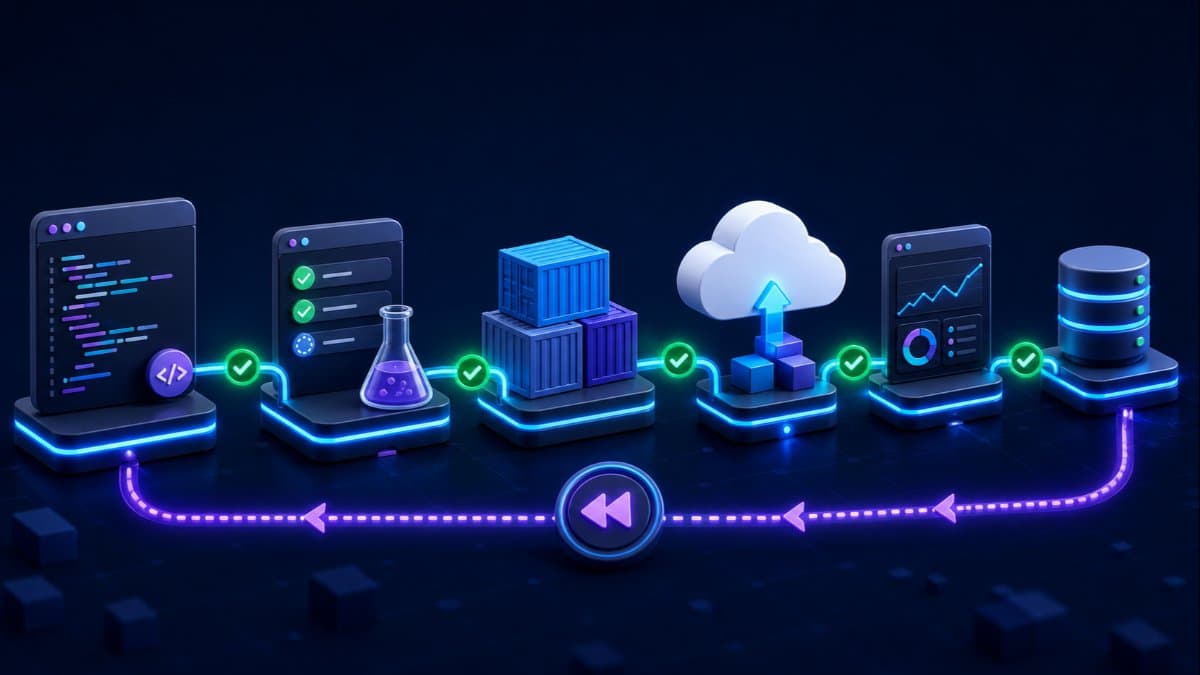
CI/CD for Growing Teams: A Practical DevOps Guide
A CI/CD pipeline turns software delivery into a repeatable process. Continuous integration checks changes early, while continuous delivery prepares tested changes for safe release. The goal is not maximum automation on day one; it is a dependable path from source code to production with clear quality gates and fast recovery.
Start with source control
Every change should be traceable to a reviewed branch or pull request. Keep changes small, protect the main branch, require relevant reviews, and document what must pass before code can merge.
Create one repeatable build
The same revision should produce the same artifact across environments. Pin important dependencies, capture build configuration, and avoid manual production-only steps. Store artifacts with version information so teams know exactly what is running.
Automate high-value checks
Begin with formatting, static analysis, unit tests, dependency review, and a production build. Add integration, contract, accessibility, and security tests where they reduce real risk. Keep feedback quick so developers can act while the change is fresh.
Separate environments and secrets
Development, test, staging, and production should have clear roles. Keep configuration outside the codebase and use an appropriate secrets system. Limit production access and use least-privilege service accounts.
Control deployment risk
Feature flags, canary releases, rolling deployments, or blue-green environments can limit exposure. Choose a strategy the team can observe and support. High-risk changes may still require an approval gate.
Handle database changes safely
Prefer backward-compatible migrations that let old and new application versions run during rollout. Separate destructive cleanup, test with realistic data, and confirm recovery before production.
Observe the release
A green job does not guarantee a healthy user experience. Monitor errors, latency, critical transactions, background jobs, and infrastructure. Connect deployments to monitoring events so impact is visible.
Design rollback in advance
Define when to roll back, who decides, how data changes are handled, and which communication is required. Test recovery periodically; an untested plan is only an assumption.
Improve with delivery metrics
Deployment frequency, lead time, change failure rate, and recovery time can reveal bottlenecks. Use metrics to improve the system, not rank people.
Start with one application and one standard pipeline. Automate the build and essential tests, create staging, then add controlled production release, monitoring, and rollback. Document the pattern and reuse it. CI/CD works best as a shared engineering capability rather than scripts understood by one person.